
Some beaches invite travelers to slow down and relax. Others spark curiosity, pulling the eye toward something unusual beneath the surface. Beaches with blue holes do both.
They offer sunlit shores and calm waters on the outside, while concealing dramatic depths shaped by geology, time, and the ocean itself.
A blue hole is essentially a deep vertical marine cave or sinkhole filled with water. What makes it visually striking is the contrast between the light turquoise shallows and the dark blue center, which often appears almost circular when viewed from above.
Found in both coastal and inland settings, blue holes are especially captivating when they meet sandy beaches and coral lagoons.
This guide explores what blue holes are, why they are so special, and some of the most remarkable beaches with blue holes across the globe.
What Exactly Is a Blue Hole?
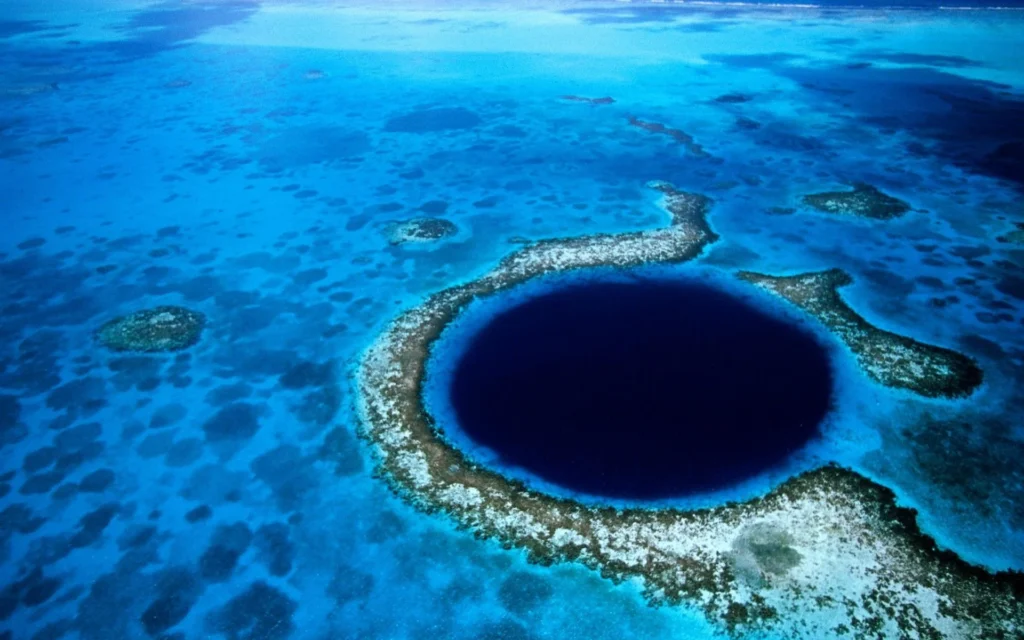
A blue hole is a vertical underwater cavity or sinkhole filled with water that appears dark blue due to its depth.
Most blue holes formed during past ice ages when sea levels were significantly lower. Rainwater dissolved limestone rock, creating caves and voids. As sea levels rose, these caves flooded, leaving behind deep water filled shafts.
There are two main types of blue holes:
Marine blue holes, found in oceans and coastal lagoons, often connected to coral reef systems.
Freshwater blue holes, found inland or near coasts, filled by rainwater or underground springs.
Their deep blue appearance comes from depth and light absorption. Shallow water reflects lighter shades of blue and green, while deeper water absorbs more light and appears darker.
Some blue holes plunge hundreds of meters down, making them among the deepest underwater features on Earth.
Blue holes can be found in oceans, coastal lagoons, and even inland areas filled with freshwater. However, those located near beaches are often the most accessible and visually stunning.
Why Beaches with Blue Holes Are So Special
Beaches with blue holes offer a unique combination of relaxation and exploration. On the surface, you have calm shores, warm water, and scenic views.
Just a short swim or boat ride away, the seabed suddenly drops into an abyss of deep blue.
These locations attract a wide range of travelers. Casual beachgoers enjoy the striking views and calm lagoons.
Snorkelers are drawn to the rich marine life around the edges of blue holes. Experienced divers seek out the challenge and thrill of descending into the depths, where rare species and ancient formations await.
Many blue holes also hold scientific importance. Their isolated depths preserve climate records, fossils, and microbial life that cannot survive elsewhere.
This adds an element of wonder, knowing that these serene beaches sit above ecosystems largely untouched by time.
Famous Beaches with Blue Holes Around the World
Great Blue Hole, Belize
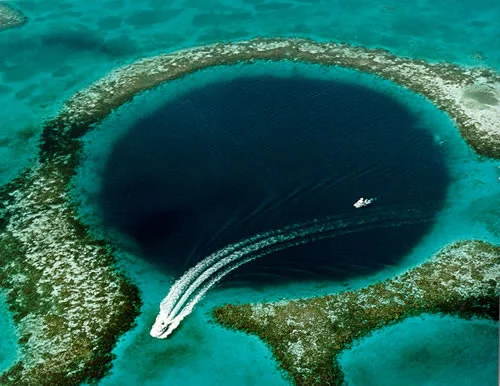
Perhaps the most famous blue hole in the world, the Great Blue Hole of Belize lies within the Lighthouse Reef Atoll.
While it is not directly on a sandy beach, nearby cayes provide stunning beach access and serve as gateways to this natural marvel.
From the air, the Blue Hole looks like a perfect dark blue circle surrounded by bright turquoise water.
Divers descend into massive limestone caverns and encounter giant stalactites formed when the cave was dry. For non-divers, scenic flights and snorkeling trips still offer unforgettable views.
Dean’s Blue Hole, Long Island, Bahamas
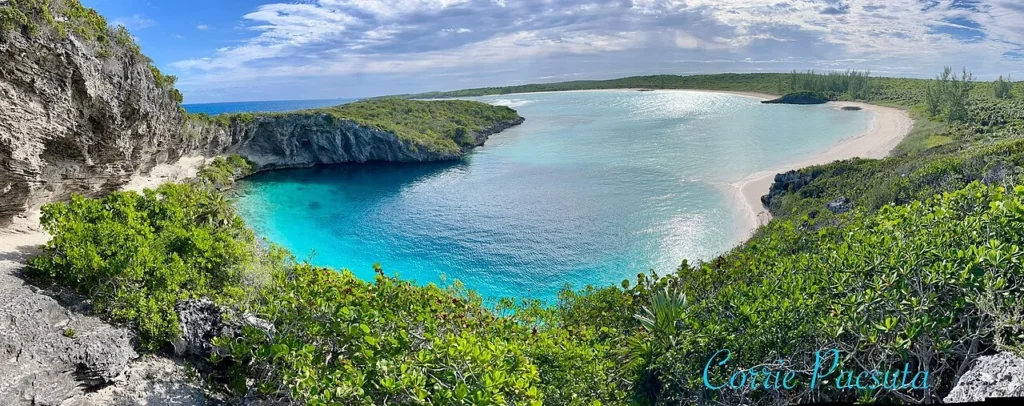
Dean’s Blue Hole sits right next to a beautiful white sand beach, making it one of the most accessible blue holes in the world. With a depth of over 200 meters, it is the deepest known blue hole on the planet.
The surrounding beach is quiet and uncrowded, ideal for travelers who want a peaceful escape.
The shallow edges are suitable for swimming and snorkeling, while professional freedivers from around the world visit to attempt record breaking dives.
The contrast between calm beach life and extreme underwater depth is what makes this place truly remarkable.
Dahab Blue Hole, Egypt
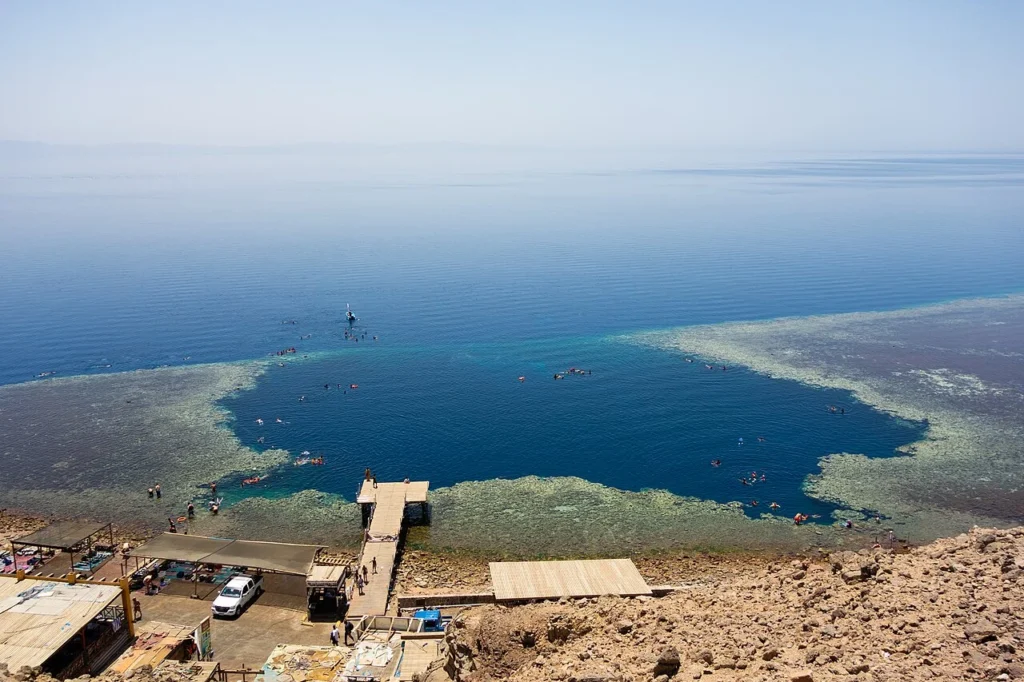
Located along the Red Sea coast, the Dahab Blue Hole is one of the most well known diving sites in the world.
The beach itself is rugged and simple, reflecting the laid back vibe of Dahab town in Egypt.
The blue hole sits just offshore and is famous for its deep vertical drop and nearby coral reef.
While the site has a reputation for being dangerous for inexperienced divers, it remains a magnet for professionals due to its clear water and dramatic underwater formations.
Even snorkelers can enjoy vibrant coral and fish near the surface.
Blue Hole of Gozo, Malta
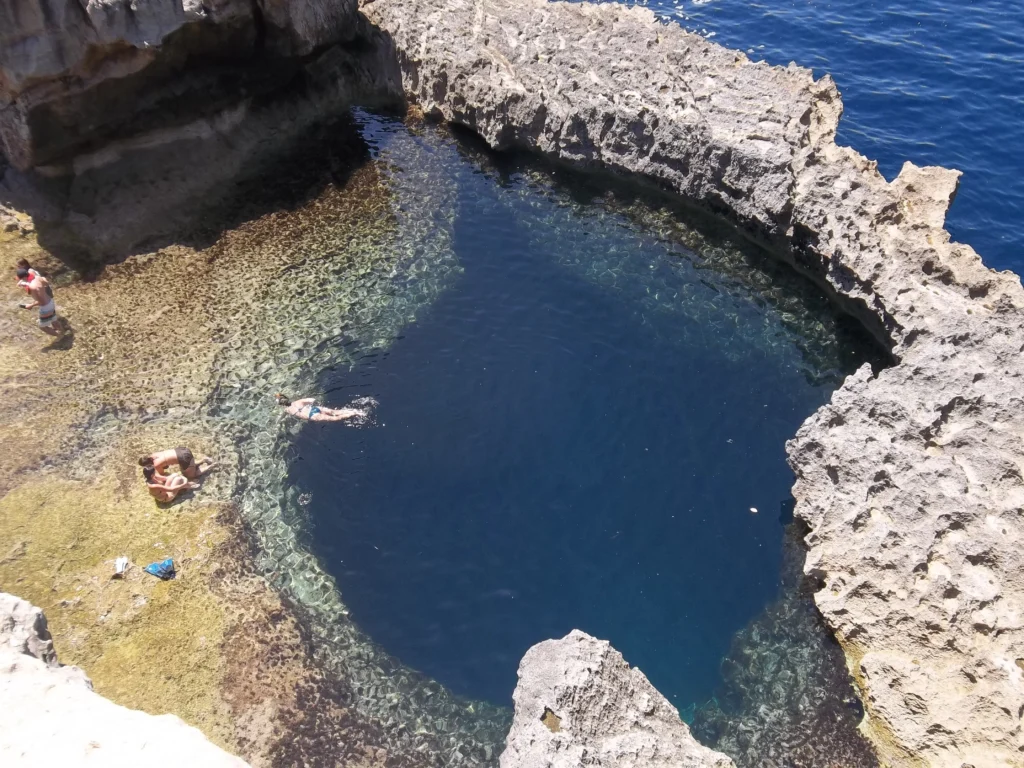
On the island of Gozo, the Blue Hole sits beside the remains of the Azure Window, once one of Malta’s most iconic landmarks.
Although the rock arch collapsed in 2017, the blue hole remains a highlight for visitors.
The surrounding rocky beach offers panoramic views of the Mediterranean Sea. Swimmers and snorkelers can enter the blue hole through a natural archway that opens into open water.
The site is popular but still feels raw and natural, especially early in the morning or outside peak season.
To Sua Ocean Trench, Samoa
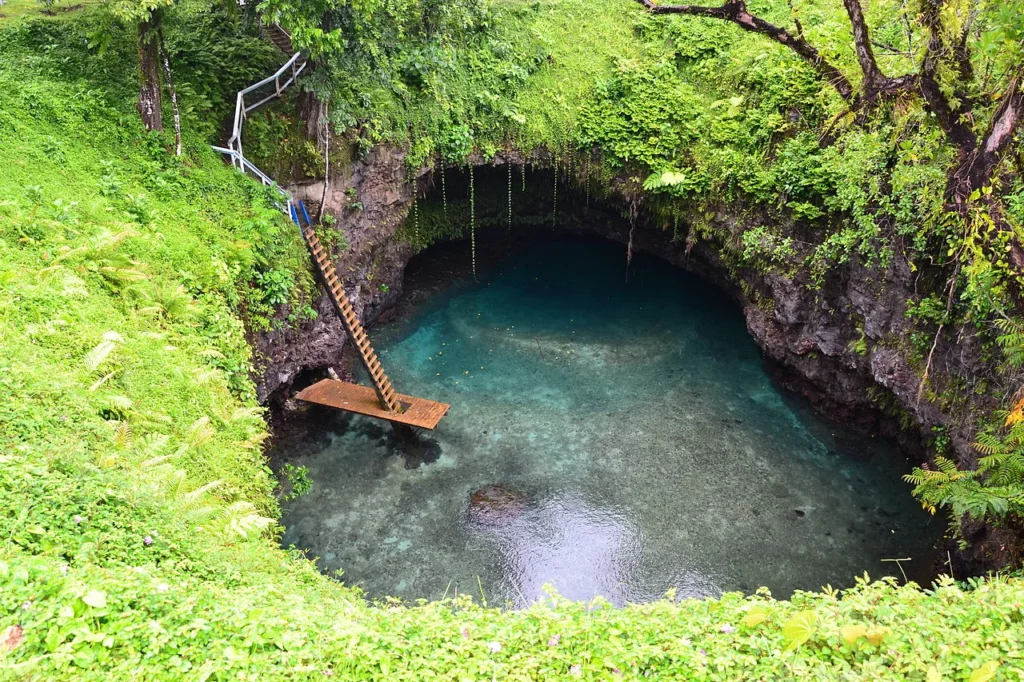
To Sua Ocean Trench is a freshwater blue hole set inland but closely connected to the coast.
A short walk from the ocean, this massive sinkhole is surrounded by lush greenery and accessed by a long wooden ladder.
Though not directly on a beach, its coastal location and natural beauty make it a must visit spot for travelers exploring Samoa.
The water is incredibly clear, and swimming here feels like stepping into a hidden natural pool carved by time.
Marine Life and Ecosystems Around Blue Holes
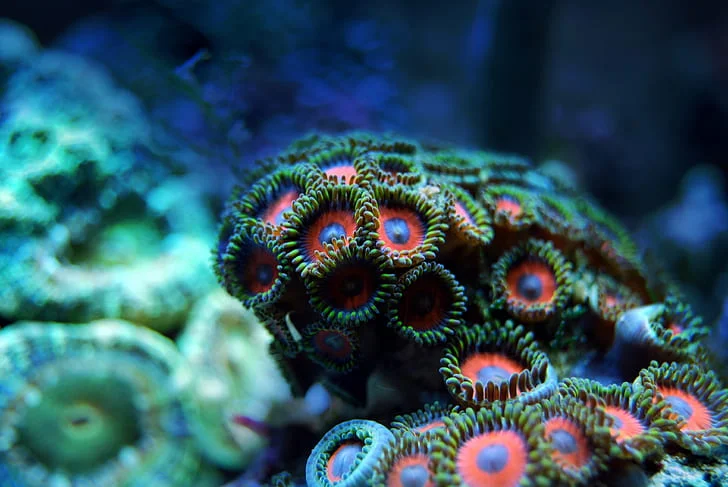
The edges of blue holes are often teeming with life. Coral reefs, sponges, and seagrass thrive in the shallow zones, attracting colorful fish, turtles, rays, and reef sharks.
The deeper sections are usually darker and colder, supporting fewer species but sometimes hosting rare microorganisms.
Because blue holes are relatively isolated environments, they act as natural laboratories for scientists.
Some contain layers of water with no oxygen, preserving ancient remains and offering clues about Earth’s past climate.
For travelers, this means snorkeling and diving experiences that feel different from typical reef sites, with sudden depth changes and dramatic underwater scenery.
Environmental Threats and Responsible Tourism
Despite their depth, blue holes are fragile ecosystems. Pollution, uncontrolled tourism, and coral damage threaten many sites.
Travelers can help by:
- Choosing certified local operators
- Avoiding touching coral or cave formations
- Respecting access rules and safety guidelines
- Supporting destinations that promote conservation
Sustainable tourism is essential to preserving blue holes for future generations.
When Is the Best Time to Visit?
The best time to visit beaches with blue holes depends on location. Tropical destinations like the Bahamas, Belize, and Samoa are best visited during dry seasons, when water visibility is highest and weather is calm.
Mediterranean blue holes are ideal in late spring or early autumn, when crowds are smaller but water temperatures remain pleasant.
Always check local conditions, as visibility and safety can vary throughout the year.
Why Blue Holes Belong on Every Serious Traveler’s List
Beaches with blue holes offer more than scenery. They combine geology, history, adventure, and serenity in one place.
They remind travelers that some of the most extraordinary destinations are defined not by what is immediately visible, but by what lies beneath.
Whether viewed from the shore or explored underwater, blue holes create a sense of wonder that few natural features can match.
Final Thoughts
Beaches with blue holes offer something rare in travel. They combine surface level beauty with hidden depth, both literally and figuratively.
Whether you are a backpacker seeking unique landscapes, a casual traveler drawn to natural wonders, or a diver chasing once in a lifetime experiences, these destinations deliver a sense of awe that lingers long after the journey ends.
Standing on a quiet beach, looking out at a circle of deep blue surrounded by crystal clear water, it becomes clear why blue holes have fascinated explorers, scientists, and travelers for generations.
They remind us that some of the most extraordinary places on Earth are not just seen, but discovered.
Stay tuned with us. Further, follow us on social media for the latest updates.
Join us on X, Instagram for the Latest Travel related updates.