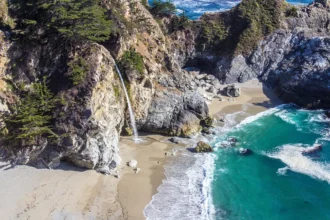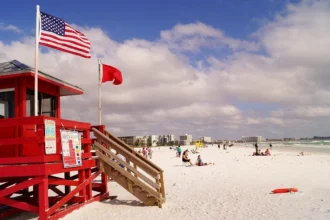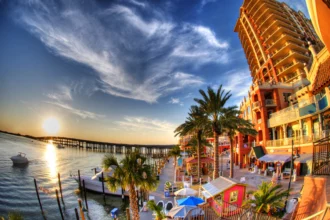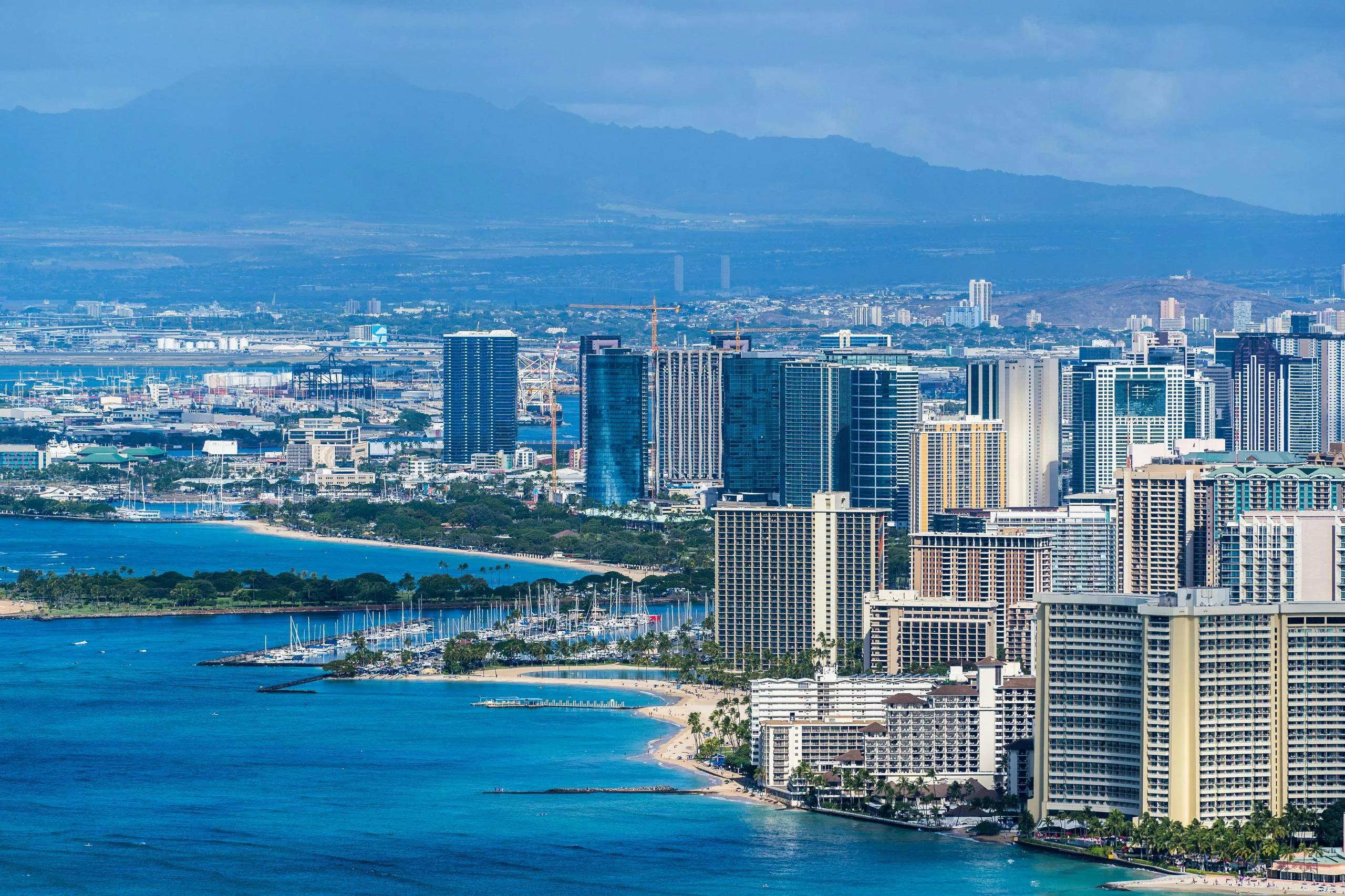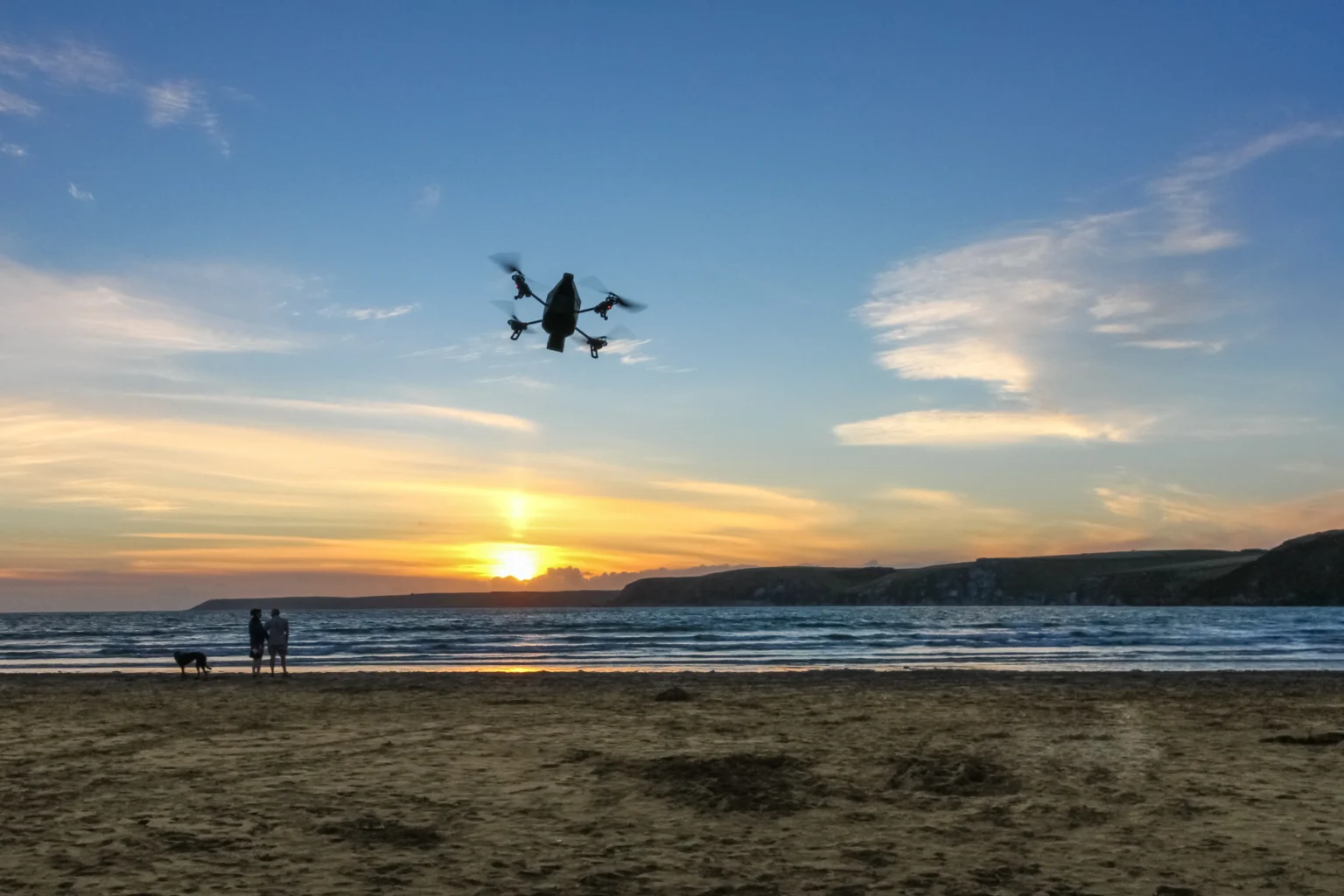

Beach photography has entered a new era. What once required helicopters, cranes, or inaccessible vantage points can now be achieved with compact drones that fit inside a backpack, opening up the best beaches for drone photography to creators everywhere.
For content creators, travel bloggers, filmmakers, and photographers, beaches are among the most visually powerful environments to capture from the air.
Patterns in sand, turquoise gradients, cliffs, reefs, waves, and human scale storytelling all come together in one frame.
Why beaches are perfect for drone photography
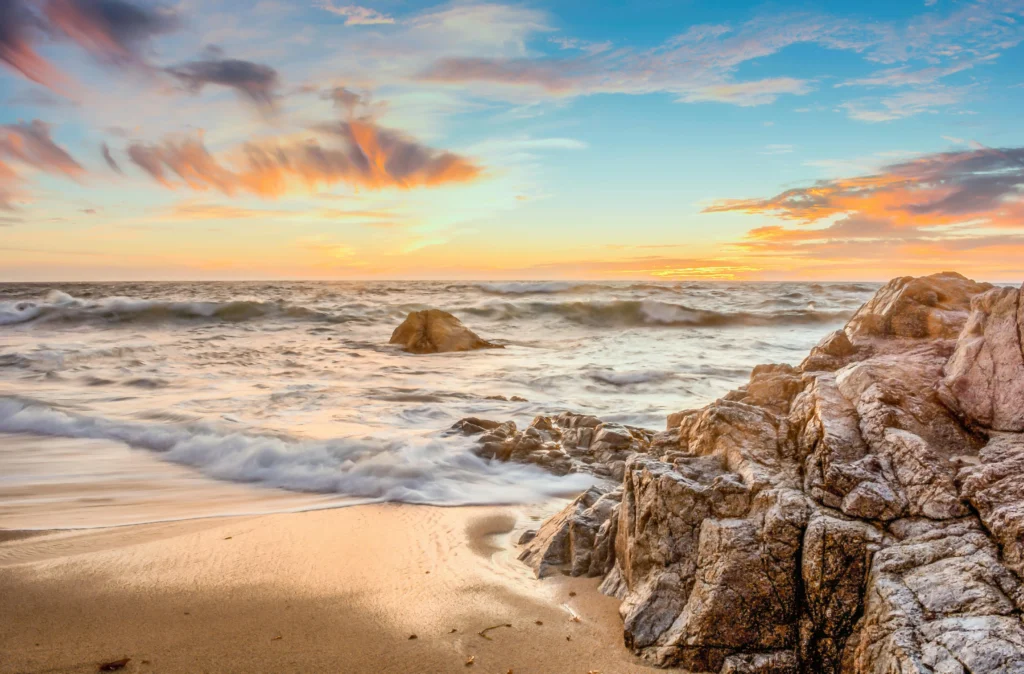
Beaches offer natural contrast and geometry that perform extremely well in aerial content:
- Clear separation of land, sea, and sky improves composition
- Natural leading lines created by shore curves and waves
- Strong color palettes that look cinematic even without heavy grading
- High engagement on Instagram, YouTube, and travel blogs
- Evergreen search demand for “beach drone shots” and destination content
When chosen correctly, beaches allow creators to produce cinematic visuals while still flying responsibly and legally.
How these beaches were selected

Every beach in this list meets at least four of the following criteria:
- Visually striking from aerial perspectives
- Known for natural formations such as cliffs, reefs, ice, or sand patterns
- Historically popular with photographers and filmmakers
- Feasible drone operation with permits or under standard regulations
- High search interest and global recognition
This guide avoids locations that are permanently no-fly zones or that present serious ethical or wildlife risks.
1. Praia da Marinha, Portugal
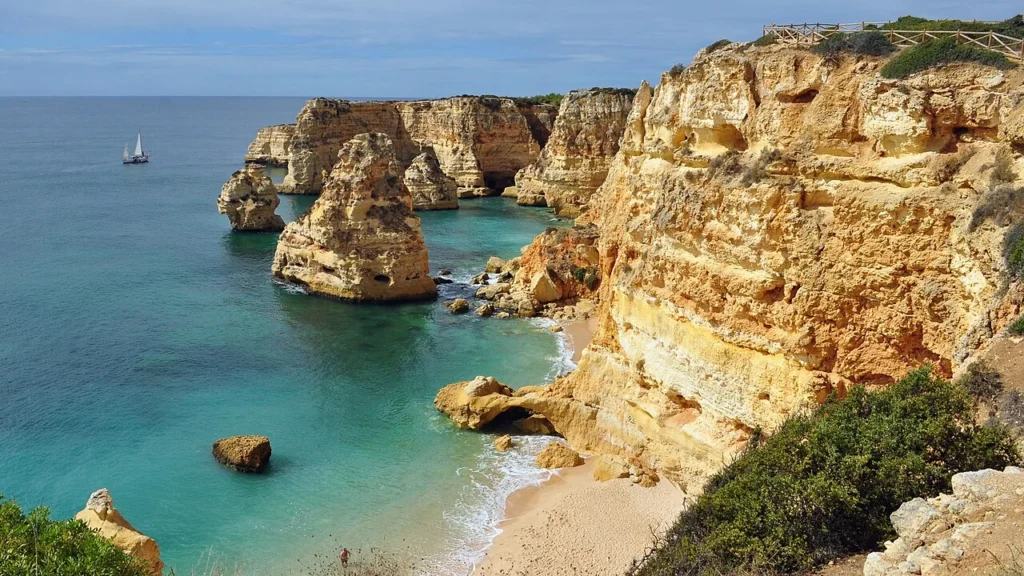
Praia da Marinha is widely regarded as one of the most photogenic beaches in Europe. Towering limestone cliffs, sea arches, and turquoise water make it a natural aerial masterpiece.
Why it is ideal for drones
- Dramatic rock formations create depth and scale
- Calm seas on many days allow clean reflections
- Excellent light during sunrise and late afternoon
Best time to shoot
April to October, sunrise for minimal crowds and soft shadows
Drone considerations
Portugal follows EU drone regulations. Recreational flights are often allowed under Open Category rules, while commercial shoots may require registration and permission from local authorities.
Shot ideas
- Top-down nadir shots over natural pools
- Slow reveal from cliff edge to sea arch
- Parallax movement around isolated rock stacks
2. Kelingking Beach, Bali
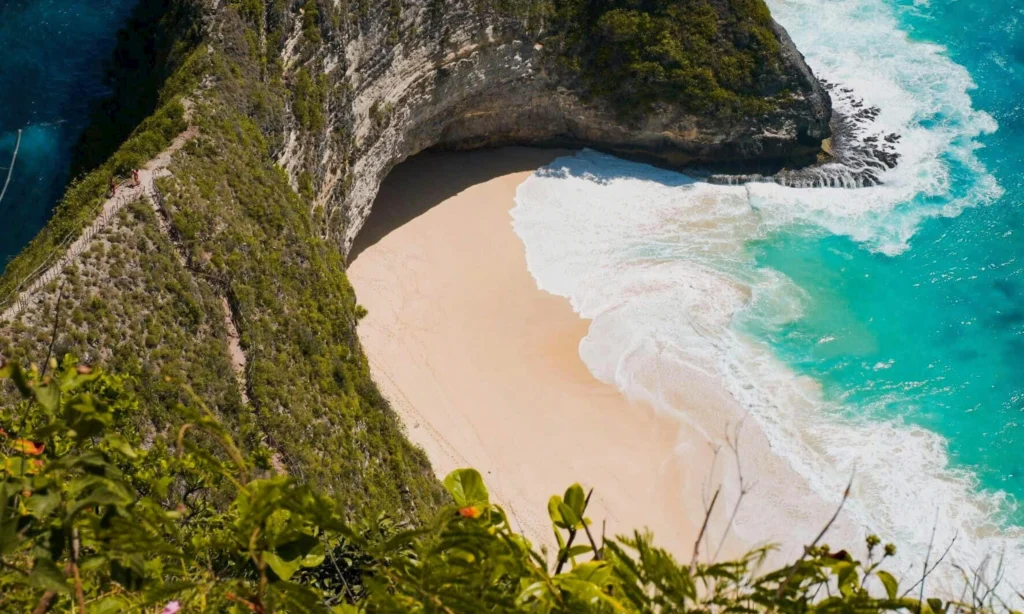
Known globally as the “T-Rex Beach,” Kelingking is one of the most recognizable drone locations on the planet. The curved cliff formation creates instant visual impact.
Why it is ideal for drones
- Extreme elevation change creates cinematic reveals
- Strong contrast between cliff, sand, and sea
- Massive viral potential for reels and shorts
Best time to shoot
Early morning before strong winds and tourist crowds
Drone considerations
Indonesia allows drones under certain weight limits, but commercial creators should verify local permissions. Wind gusts near cliffs require experienced piloting.
Shot ideas
- Backward pull-out reveal from cliff edge
- Vertical descent emphasizing scale
- Orbit shots following cliff curvature
3. Atuh Beach, Nusa Penida
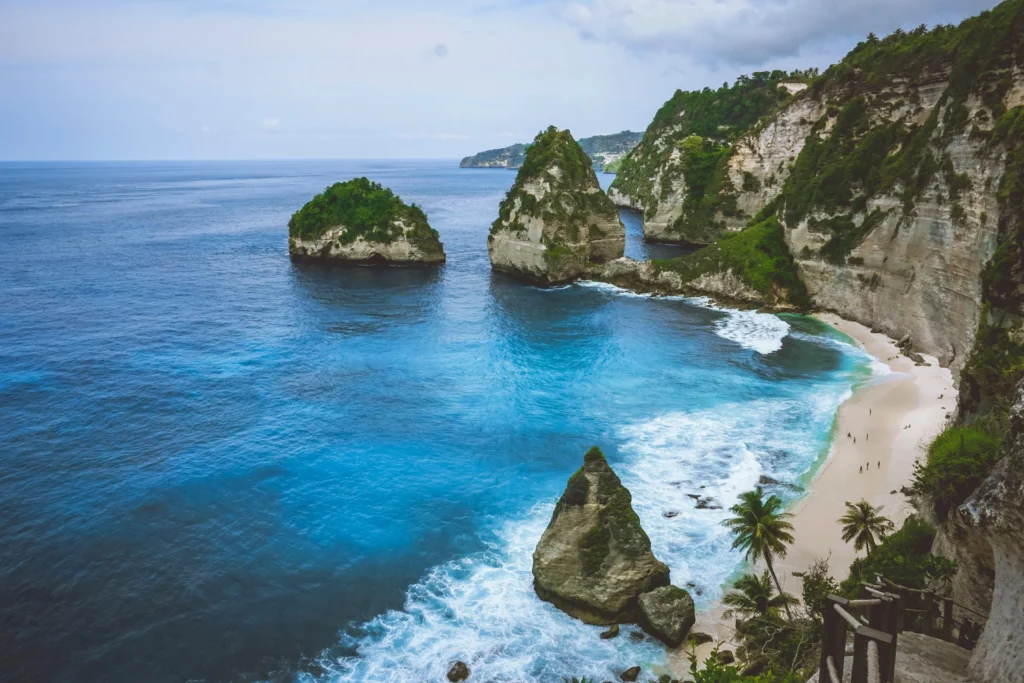
Atuh Beach offers a more symmetrical and less crowded alternative to Kelingking, with sharp limestone formations and vibrant water.
Why it is ideal for drones
- Crescent shaped shoreline works perfectly for nadir shots
- Excellent reef patterns at low tide
- Less visual clutter
Best time to shoot
Morning during low tide
Drone considerations
Similar to other parts of Nusa Penida, check local enforcement and avoid flying near people on narrow beaches.
Shot ideas
- Spiral ascent revealing beach symmetry
- Reef texture shots during low tide
4. Lanikai Beach, USA
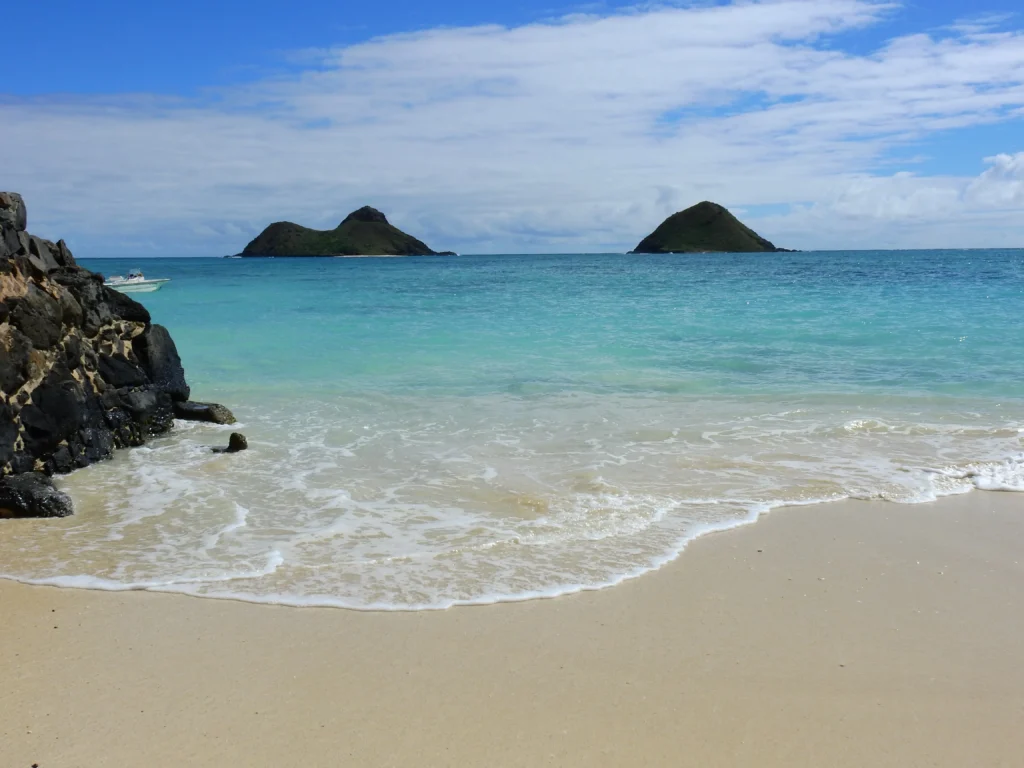
Lanikai is famous for calm waters, pastel skies, and the Mokulua Islands in the distance. It is one of the most serene drone locations in Hawaii.
Why it is ideal for drones
- Glass-like water during sunrise
- Strong foreground to background balance
- Perfect for lifestyle and travel storytelling
Best time to shoot
Sunrise only
Drone considerations
The United States enforces FAA rules including Remote ID and TRUST certification. Local restrictions and privacy laws must be respected.
Shot ideas
- Sunrise time-lapse ascent
- Low altitude tracking along shoreline
- Minimalist wide shots with islands framed on horizon
5. Palolem Beach, India
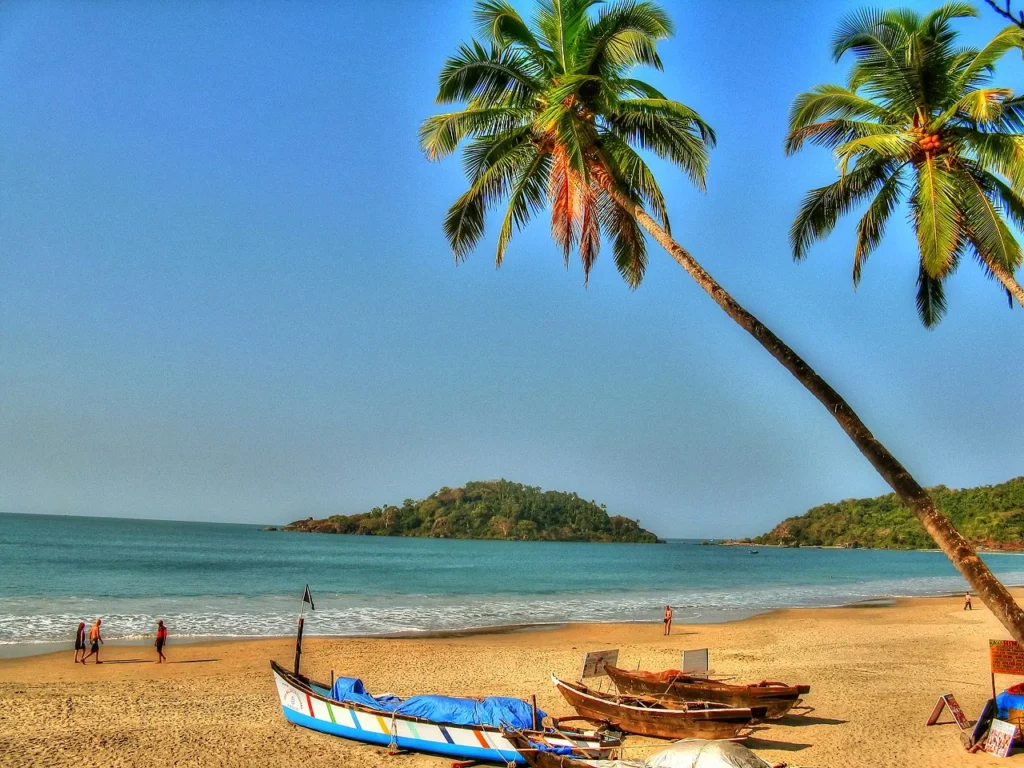
Palolem combines tropical beauty with cultural vibrancy. Palm trees, fishing boats, and curved shoreline make it visually rich from the air.
Why it is ideal for drones
- Long natural curve creates strong leading lines
- Vibrant colors and textures
- Excellent storytelling opportunities
Best time to shoot
November to March, early morning
Drone considerations
India requires compliance with DGCA Digital Sky rules. Permissions may be required depending on drone category and location.
Shot ideas
- Palm-framed crane shots
- Boat movement during blue hour
- Nadir shots of shoreline geometry
6. Camusdarach Beach, Scotland
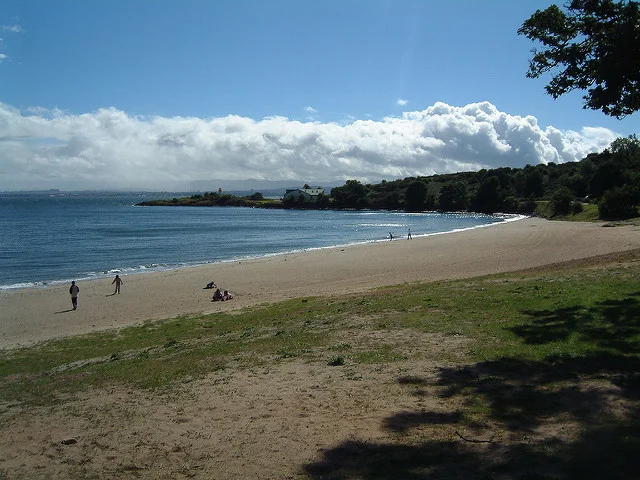
This Scottish beach offers a cinematic blend of white sand, turquoise water, and rugged mountain backdrops.
Why it is ideal for drones
- Rare mix of beach and alpine scenery
- Dramatic skies add mood
- Low population density
Best time to shoot
Late spring to early autumn
Drone considerations
UK CAA rules apply. Winds can be strong, and weather changes rapidly.
Shot ideas
- Wide panoramic reveals
- Low passes with clouds rolling over mountains
7. Anse Source d’Argent, Seychelles
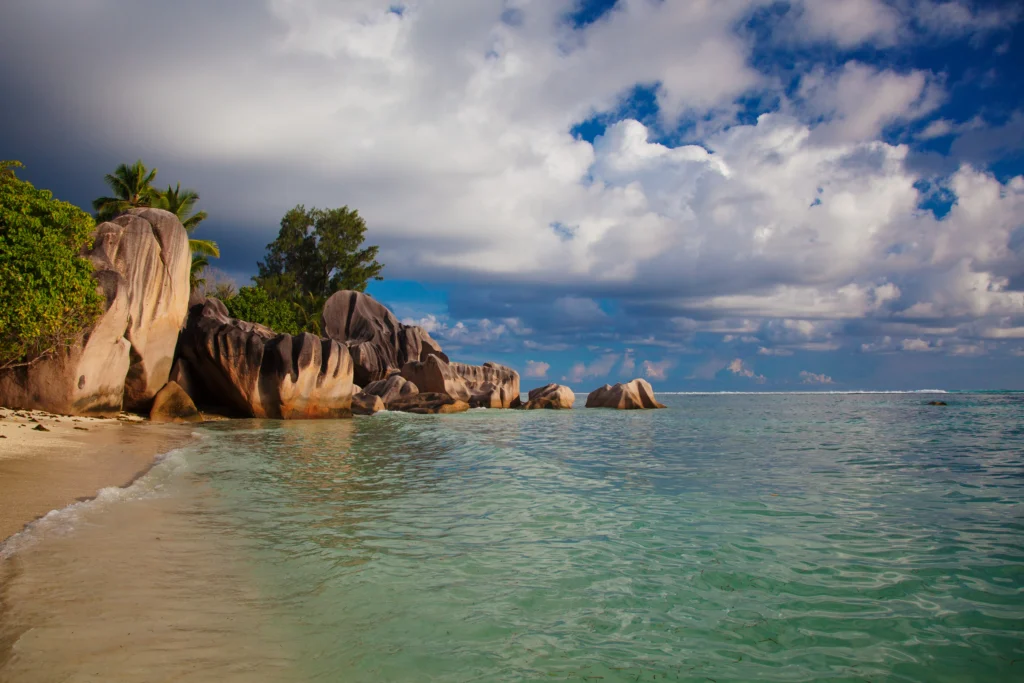
This beach is instantly recognizable due to its granite boulders and shallow aquamarine waters.
Why it is ideal for drones
- Iconic formations create natural framing
- Exceptional color contrast
- High editorial value
Best time to shoot
Early morning
Drone considerations
Seychelles has stricter drone rules and protected areas. Permits are often required.
Shot ideas
- Top-down boulder compositions
- Slow gliding movements between rock clusters
8. Diamond Beach, Iceland
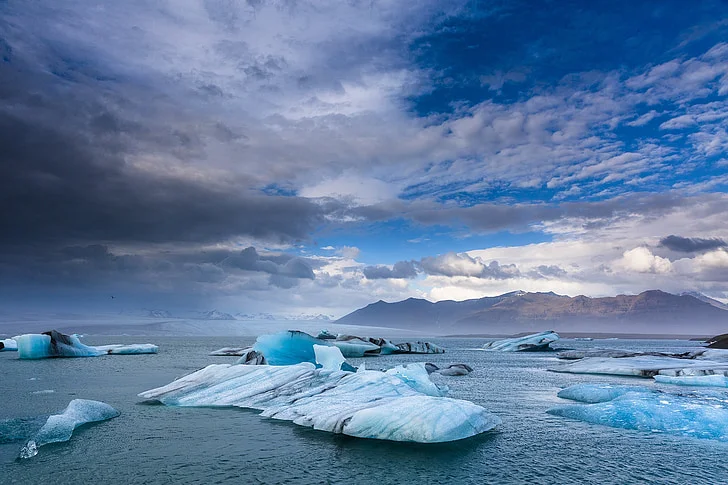
Diamond Beach offers one of the most surreal landscapes on Earth. Ice chunks scattered across black volcanic sand create unmatched contrast.
Why it is ideal for drones
- Extreme visual contrast
- Seasonal variety
- Editorial and fine-art appeal
Best time to shoot
Winter for ice density, summer for accessibility
Drone considerations
Some Icelandic parks restrict drones seasonally. Always verify local rules.
Shot ideas
- Slow vertical reveals
- High contrast black-and-white edits
Gear checklist for beach drone shoots
- Drone with strong wind resistance
- ND filters for bright light
- Landing pad to protect from sand
- Extra batteries stored warm
- Microfiber cloths for salt spray
- Insurance and registration proof
Safety and ethical flying principles
- Never fly over people or wildlife
- Avoid nesting seasons and marine life areas
- Respect local communities and authorities
- Land immediately if asked
- Prioritize safety over content
Ethical creators build long-term access and trust.
Common mistakes to avoid
- Relying only on app geofencing
- Ignoring local enforcement practices
- Flying during peak tourist hours
- Over-editing natural colors
- Publishing without proper credits or disclosures
Frequently Asked Questions (FAQs)
Drone rules vary by country and beach. Some beaches allow recreational drone use, while others restrict flying due to wildlife, crowds, or nearby airports. Always check local aviation and municipal regulations before flying.
Photography-friendly beaches usually have open space, fewer crowds, minimal no-fly restrictions, dramatic natural features, and clear sightlines, perfect for aerial shots and cinematic angles.
Countries like Australia, Iceland, Portugal, Indonesia, and parts of the USA are popular for drone photography, but permits or registration may still be required depending on location.
In many countries, casual drone flying may not require a permit, but commercial content creation often does. National parks and protected coastlines usually require special permissions.
Early morning and late afternoon (golden hour) offer the best lighting, fewer people, calmer winds, and safer flying conditions.
Yes. Drones are commonly banned on beaches near airports, military zones, marine reserves, or heavily populated tourist areas. Always look for posted signs or official guidelines.
Use ND filters, shoot in RAW, keep ISO low, and adjust white balance to handle bright sand and reflective water for sharper, more cinematic images.
Flying near the ocean comes with risks like strong winds, salt spray, and signal interference. Maintain line of sight, avoid flying too low, and regularly clean your drone after beach flights.
Yes, but beginners should start at quiet, open beaches with minimal wind and practice basic maneuvers before attempting complex shots.
Final thoughts
Drone photography is not about flying everywhere. It is about flying responsibly in the right places, at the right time, with the right intent.
The beaches listed here allow creators to produce breathtaking visuals while respecting laws, people, and nature.
If you are building content for long-term growth, these destinations give you both creative depth and search visibility.
Used wisely, they can anchor reels, YouTube videos, blog posts, and commercial portfolios for years.
Stay tuned with us. Further, follow us on social media for the latest updates.
Join us on X, Instagram for the Latest Travel related updates.